

about
Ireland’s Great Hunger Museum of Fairfield was established by leaders of the Gaelic-American Club of Fairfield and investigates the Famine and its impact through art. We have partnered with Quinnipiac University to serve as the new caretakers and curators of the IGHM collection, and our museum interprets the Famine visually, allowing artists — both those contemporaneous with the Great Hunger and those working today — to explore the impact of the loss of life, the leeching of the land, and the erosions of language and culture. Through its display of outstanding historical and contemporary images, layers of history are peeled back, to uncover aspects of the Famine indecipherable by other means.

Slideshow Presentations
The Famine Immigrants of Connecticut
Gaelic American Club
74 Beach Road, Fairfield CT
Saturday December13, 7:00 pm
Irish Immigrant Experience on Staten Island
The Maine Irish Heritage
Center, Portland, ME.
February 20,2026
Irish Immigrant Experience on Staten Island
Darien Library,
1441 Post Rd, Darien CT.
Saturday April 11


Art, Memory, and the Irish Experience
Reflections from Muldoon-Doyle Cultural Night
By John Foley, IGHMF President
The Ireland’s Great Hunger Museum of Fairfield exists at the intersection of art, history, and moral imagination.
Rooted in the story of Ireland, but speaking to the wider world, our mission is to remember what happens when a society turns away from its most vulnerable – and to honor the resilience of those who endure.
Why This Story Matters
I grew up in Ireland, in a place where education was treasured. We believed that if people had the chance to learn, to think, and to create, the world would move toward something better. For us, America stood as the leader of that movement – a place where progress was not just a dream, but a shared project.
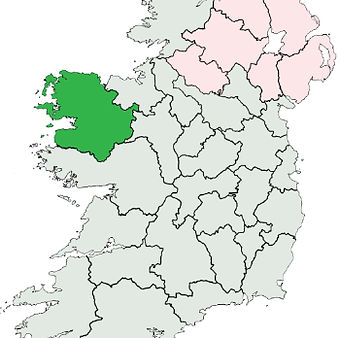
Mayo During the Great Hunger
By Patrick Gannon
30 Mar 1849: In a windswept mountain pass, somewhere between Louisburgh, Co. Mayo and Delphi, Catherine Dillon, along with her son Patrick and daughter Honor, trudged their way toward a hunting lodge owned by the Marquess of Sligo. Making this journey, of roughly 15 miles, was a last-minute decision, and this destitute family, already in a weakened condition was hardly dressed for the bitter, wintry conditions they now faced. This was no hunting trip, and under normal circumstances, such an endeavor would be ill-advised at best. So why would this young mother believe that taking such a risk was her only option? To answer this question, one must understand the plight of the Dillon family and much of Co. Mayo at this point in history.
Co. Mayo sits on the central-western coast of Ireland, jutting out into the Atlantic. It boasts a rugged beauty, including Croagh Patrick and the Nephin Beg Mountain Range, along with rivers giving way to dramatic sea cliffs, paired with islands like Achill and Clare. The scenery is breathtaking, but the terrain can be unforgiving. Understandably, Mayo’s pre-famine population density was low, compared to the balance of the island, ranking 28th out of 32 counties by that measure.

Per Special Request*
Layers of History: Kilmallock in County
Limerick During the Famine
Famine Commemoration Day Presentation
by Loretto Leary
May 18th 2025
A town's rise and fall is like an ancient tapestry interwoven with layers of history—at times it is woven with golden threads of prosperity, displaying vibrant scenes of bustling streets and booming trades. As time passes, the tapestry's colors fade, and fraying edges whisper stories of abandonment in empty streets and silent village squares. In County Limerick, Kilmallock is a town interwoven with layers of history, which has known both the golden threads of prosperity and the silent squares of abandonment.
In 1832, Kilmallock was recognized as a historic town in County Limerick, renowned for its rich ecclesiastical and architectural heritage. Once a fortified settlement, it housed monasteries, castles, and stone houses, tracing back to a monastery founded by St. Maloch in the 6th century. The town declined sharply after Cromwell’s forces dismantled it and became caught in historic battles surrounding the famine and the Irish Civil War in 1922.
* Due to the overwhelming response to Loretto Leary's presentation on Famine Commemoration Day at the GAC we have published her presentation in it's entirety

Images of the Founders' Gala on April 5th 2025
The Founders’ Gala April 5th at the
Gaelic American Club
It was not just a celebration; it was a testament to the unwavering commitment of our community to preserve and share the story of Ireland’s Great Hunger.
We gathered in recognition of the remarkable journey - one fueled by passion, resilience, and the belief that history must be remembered, honored, and taught. Our museum’s mission is not only to safeguard the most extensive collection of Great Hunger art in the world but also to expand it, ensuring its relevance for future generations.
With that vision in mind, we are proudly unveiled two rare and significant watercolor paintings by Alfred Downing Fripp, RWS (1822–1895), Galway Family Preparing Food in a Cottage and Irish Mendicants. These works, painted in 1845 at the very onset of the Great Hunger, are poignant reminders of a history that must never be forgotten. Their acquisition marks a significant step forward in our promise to grow this collection, making IGHMF a living center for dialogue, education, and cultural preservation.
The Irish community has always been the best storyteller of its own history. Through the art we safeguard, we give voice to those who suffered, persevered, and built new legacies. This museum belongs to all of us - not just as a repository of the past, but as a beacon for the future.
The community support at the Founders Gala strengthens our mission and brings us closer to realizing a permanent home for IGHMF in the Fairfield Historic District. Together, we are building something enduring - something that will educate, inspire, and stand as a tribute to our ancestors.
Thank you for being part of this journey.

Fairfield Hosts Irish Famine Commemoration Day to Honor Resilience and
Remembrance at the
Gaelic American Club in Fairfield, CT
Loretto Leary
Contributor @IrishCentral
May 20, 2025
On Sunday, May 18, the Gaelic American Club in Fairfield, Connecticut, hosted the 2nd Annual Irish Famine Commemoration Day Ceremony, an event held in conjunction with Ireland's Great Hunger Museum of Fairfield.
This solemn and poignant gathering paid tribute to the millions affected by one of the darkest periods in Irish history - the Great Hunger of 1845 to 1852.
The ceremony commenced with the stirring performances of the Irish and American National Anthems, sung by Judy O’Halloran Sullivan and Con O’Halloran, setting a reverent tone for the occasion.

IGHMF needs your support
Ireland's Great Hunger Museum of Fairfield is a work in progress and needs your support to see it to completion.
You can help IGHMF along this journey by making a donation and by volunteering your time.
Please visit the IGHMF Donation Page